
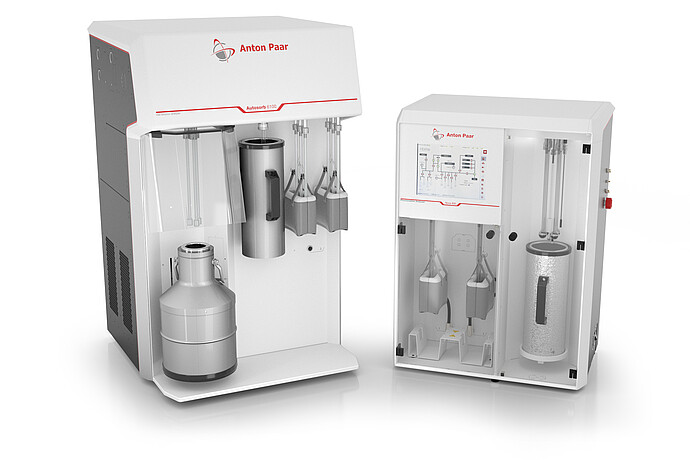
Gas Adsorption Analyzers
Analysis of pore size, surface area, and gas/solid interactions
These compact, fully automatic analyzers measure high-resolution physisorption, chemisorption, and vapor sorption isotherms for pore size, surface area, and specific gas/solid interactions. All these parameters are essential for the optimization of a wide range of materials, including adsorbents, catalysts, pharmaceuticals, battery materials, and other porous solids.
Anton Paar Products
High Vacuum Physisorption Analyzer:
Autosorb

Surface Area and Pore Size Analyzers:
Nova
Gas Sorption Analyzer:
QUADRASORB evo
Automated Flow Chemisorption Analyzer:
ChemBET Pulsar
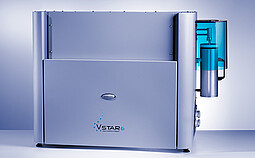
Vapor Sorption Volumetric Gas Sorption Analyzer:
VSTAR
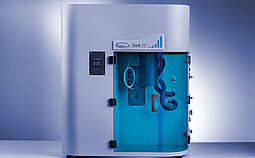
High-Pressure Volumetric Gas Sorption Analyzer:
iSorb
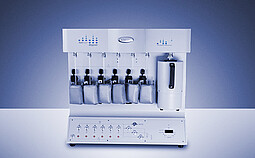
Vacuum Degasser:
XeriPrep
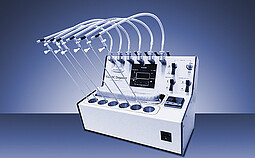
Vacuum and Flow Degasser:
FloVac
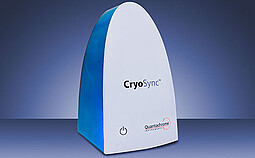
Cryostat Accessory for autosorb iQ:
CryoSync
Versatile portfolio in surface area and pore analysis
Surface area and pore characteristics greatly influence a material’s suitability and performance in real-world applications. Our broad, forward-looking instrument portfolio covers physisorption, chemisorption, vapor sorption, and associated sample preparation. We help you prepare for tomorrow’s measuring challenges.
Speed and precision: No compromises for high-throughput labs
We understand that your work demands high-precision measurements at a fast pace. Our instruments combine multiple analysis stations, intelligent dosing algorithms, highly precise pressure measurements, and temperature control to deliver on both counts with no compromises. This way, speed and precision are no longer an either-or-choice in surface area and pore size analysis.
The reference in data reduction
Our gas adsorption software packages include a comprehensive peer-reviewed DFT method library. These proprietary data-reduction methods, like our unique Quenched Solid Density Functional Theory (QSDFT), have been developed in conjunction with academic partners and deliver reliable and accurate pore size distributions.
Working at high pressures – no problem!
Our specialized analyzers collect high-quality gas adsorption and kinetic data at extreme conditions, including measurement pressures up to 200 bar. This makes them ideal for characterizing materials to assess their suitability for environmentally relevant applications involving, for example, methane, carbon dioxide, hydrogen storage, and gas separation processes.
Support where you need it, when you need it
All our instruments come with a standard 3-year warranty – backed by our global sales and service support network spanning more than 86 locations. This enhanced presence ensures quick, qualified responses and ultimately translates into low cost of ownership and maximum uptime for your instruments.
Webinars

We offer you a great and constantly growing choice of live webinars and recordings on products, applications, and scientific topics.
View webinars